 WhatsApp

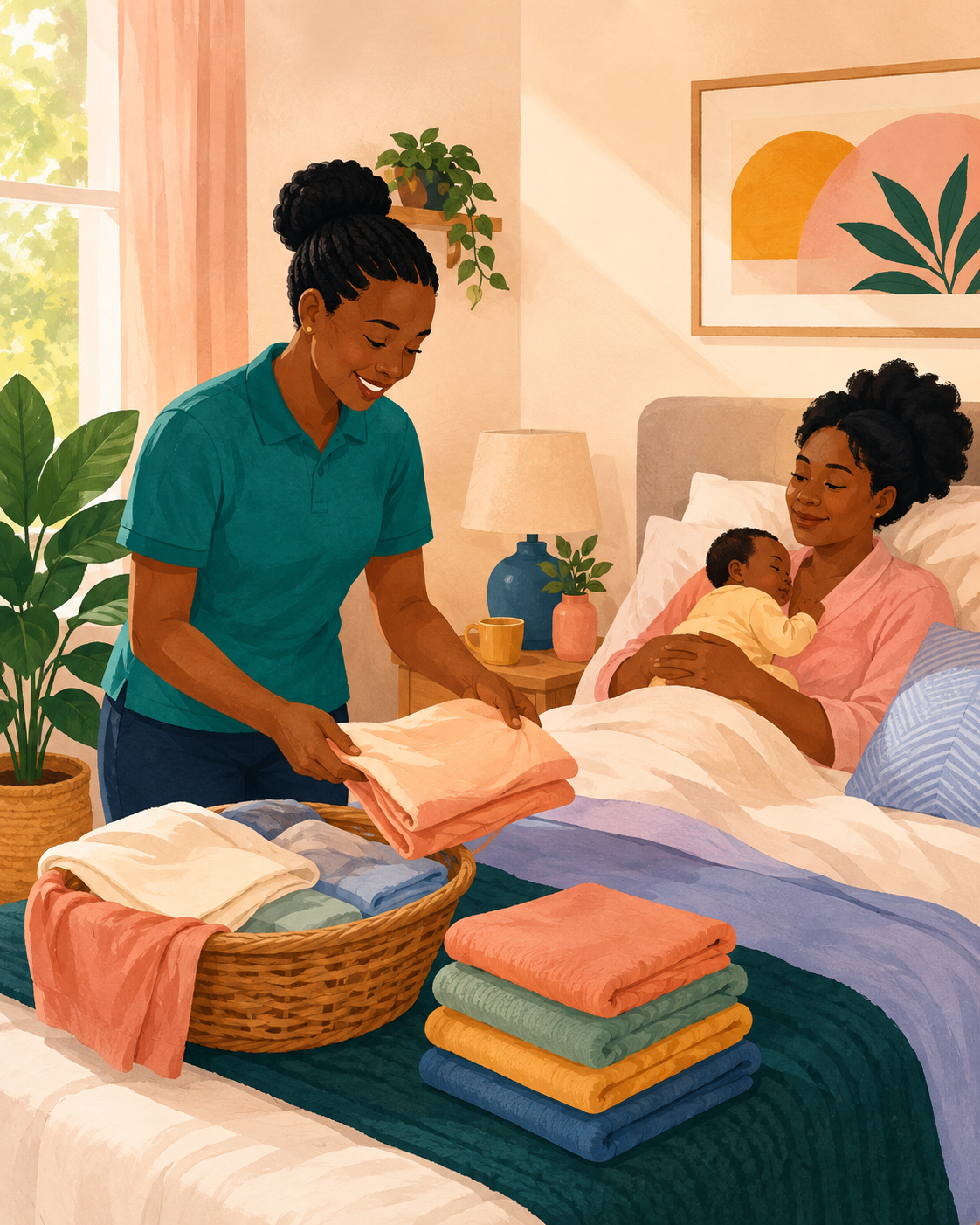
Omugwo is one of the ways Nigerian families have traditionally supported women after childbirth. A mother, mother-in-law, aunt, or another trusted female relative may come to stay with the new mother, helping with cooking, household chores, bathing the baby, and making sure the mother has time to rest.
At its heart, Omugwo addresses something that modern postpartum care also recognises: a woman should not be expected to recover from childbirth while immediately returning to the demands of everyday life. The first few weeks after birth are a period of significant physical and emotional adjustment, and having someone around to provide practical support can make a real difference.
But families are changing, and so is the way postpartum care is provided. Grandmothers may live in another city or another country. Some families may not have relatives who can stay for several weeks. Others may have a family member available but still need professional support for aspects of care that require clinical knowledge.
This does not mean Omugwo has to disappear. In many families, it simply means finding a way for tradition and professional postpartum care to work alongside each other.
The first six weeks matter
The period after childbirth is often described as a time for the baby to adjust to life outside the womb, but it is equally important for the mother. Her body is recovering from pregnancy and childbirth, whether she had a vaginal delivery or a Caesarean section. She may be dealing with bleeding, pain, changes in sleep, breastfeeding difficulties, hormonal changes and significant fatigue.
The World Health Organization recommends that women and newborns receive ongoing care during the postnatal period, particularly during the first six weeks after birth. This includes monitoring the mother's physical recovery, supporting breastfeeding, assessing mental wellbeing and identifying complications early.
For a new mother, having someone around during this period can therefore be more than convenient. It can provide the practical support she needs to rest, eat properly, attend appointments and focus on recovery while someone else handles some of the responsibilities at home.
Omugwo already gets one important thing right
One of the strengths of Omugwo is that it recognises the importance of practical support. A woman who has recently given birth does not necessarily need more advice about everything she should be doing. Sometimes she simply needs someone to cook, clean, help with the baby and give her an opportunity to sleep.
This is particularly important because sleep can be difficult to come by during the early weeks. Newborns need frequent feeding and care, and mothers may be recovering physically at the same time. When relatives take responsibility for household tasks, the mother can use more of her limited energy for herself and her baby.
Professional home care can complement this arrangement rather than replace it. A nurse can focus on areas that require clinical training, while family members continue providing the emotional and practical support that has always been central to Omugwo.
But tradition and medical advice do not always say the same thing
This is where combining traditional support with professional care becomes important. Many practices associated with Omugwo are intended to help the mother feel better and recover, but not every traditional practice is necessarily appropriate for every woman.
For example, practices involving herbal preparations, very hot baths or steam, abdominal binding, or substances applied to wounds or the genital area may carry risks depending on how they are performed and the mother's medical condition. A woman recovering from a Caesarean section, for example, has a surgical wound that requires appropriate care and monitoring. Anything that interferes with wound healing or increases the risk of infection needs to be avoided.
The answer does not have to be dismissing tradition altogether. Families can keep the parts of Omugwo that provide comfort and practical support while allowing current medical guidance to determine what is safe for the mother and baby.
This is one area where having a trained professional involved can be useful. Instead of turning every traditional practice into an argument between generations, families can have someone who understands postpartum recovery and can identify when a particular practice may need to be modified or avoided.
Knowing the warning signs matters
One of the most important parts of postpartum care is knowing when something is no longer part of a normal recovery. Some discomfort, bleeding and tiredness are expected after childbirth, but certain symptoms require prompt medical attention.
Heavy or increasing bleeding, severe abdominal or pelvic pain, fever, worsening pain or redness around a Caesarean wound, difficulty breathing, severe headache, vision changes, chest pain or swelling, and pain in one leg can all be warning signs of complications.
Changes in emotional wellbeing also deserve attention. Feeling overwhelmed or tearful can happen during the early postpartum period, but persistent sadness, severe anxiety, withdrawal, hopelessness or thoughts of harming oneself or the baby should not simply be dismissed as part of motherhood. Postpartum mental health is part of postpartum healthcare.
The role of professional support is not to turn the home into a hospital. It is to make sure that changes in the mother's condition are noticed and that the family knows when a doctor or hospital needs to become involved.
The baby needs care too
Omugwo traditionally places a lot of attention on the mother, but the newborn also needs careful observation during the first few weeks. Feeding, weight gain, temperature, jaundice, cord care and general behaviour are all important parts of newborn care.
Parents and relatives may understandably become concerned when a baby behaves differently from what they expected. A baby who is feeding poorly, unusually sleepy, having difficulty breathing, developing worsening jaundice or showing other concerning symptoms may need medical assessment.
Professional newborn support can give families another layer of reassurance, particularly when the parents are inexperienced, or the baby has additional care needs. It can also help parents learn what to look out for rather than simply taking over the baby's care.
Omugwo can look different today
Modern family life means that Omugwo does not always have to mean a grandmother physically moving into the home for six weeks. The principle behind it is support, and that support can take different forms.
A grandmother may still come to stay, while a professional nurse visits the home to support postpartum recovery and newborn care. In another family, relatives may provide support remotely while a professional caregiver handles the day-to-day physical needs of the mother and baby. For families living abroad, professional home care can also provide a way to remain involved in a loved one's recovery when travelling home is not immediately possible.
The important thing is not whether a family follows the traditional version of Omugwo exactly. It is whether the mother and baby have the support they actually need.
The goal is a supported recovery
There is no need to choose between tradition and modern healthcare when both can contribute something valuable. Omugwo provides something that cannot be measured only in clinical terms: family, familiarity, practical help and emotional support during an important period of life.
Professional postpartum care brings something different. A trained nurse can monitor recovery, support newborn care, identify potential warning signs and help the family understand when medical attention is needed.
When these forms of support work together, the result can be a more complete approach to postpartum care. The grandmother can still make the meals, the aunt can still help with the baby, and the family can still maintain the traditions that matter to them. At the same time, professional support can make sure that medical aspects of recovery are not overlooked.
After all, the purpose of Omugwo has always been to make the transition into motherhood easier for the woman and her family. There is no reason that purpose cannot continue, even as the way families provide that support changes.
At Medic Connect, we provide professional postpartum and newborn care at home, helping families support new mothers through recovery while giving relatives the flexibility to remain involved in the way that works best for them.
Sources
-
WHO recommendations on maternal and newborn care for a positive postnatal experience, 2022 - World Health Organization.
-
WHO recommendations for prevention and treatment of maternal peripartum infections, 2015 - World Health Organization.
-
Optimizing Postpartum Care, 2018 - American College of Obstetricians and Gynecologists (ACOG).